[C10T1P1]Stepwells
During the sixth and seventh centuries, the inhabitants of the modern-day states of Gujarat and Rajasthan in north-western India developed a method of gaining access to clean, fresh groundwater during the dry season for drinking, bathing, watering animals and irrigation .
在第六世纪和第七世纪期间,现在的印度西北部古吉拉特邦和拉贾斯坦邦首府的居民们研发了一种获得干净的地下水的方法,这种方法使得人们在旱季也有饮用水,可以洗澡,喂养动物以及灌溉。
However, the significance of this invention - the stepwell - goes beyond its utilitarian application.
但是, 这种发明的重要性远远超出了阶梯井的实际应用。
Unique to this region, stepwells are often architecturally complex and vary widely in size and shape.
阶梯井是这个地区所独有的,是复杂的建筑物,并且在面积和形状上也大有不同。
During their heyday , they were places of gathering, of leisure and relaxation and of worship for villagers of all but the lowest classes.
在它们的鼎盛时期, 它们是用来给除了最低等级的村民之外的人们聚集、娱乐、 放松和膜拜的地方。
Most stepwells are found dotted round the desert areas of Gujarat (where they are called vav) and Rajasthan (where they are called baori), while a few also survive in Delhi.
大多数阶梯井星罗棋布地分布在古吉拉特邦(在这里,他们被称为vav)和拉贾斯坦邦(在这里,他们被称为baori)的沙漠地区, 少数存在于德里。
Some were located in or near villages as public spaces for the community; others were positioned beside roads as resting places for travellers.
其中一些位于或靠近村庄,用作社区的公共空间; 其他的位于公路旁为旅行者提供休息的地方。
As their name suggests, stepwells comprise a series of stone steps descending from ground level to the water source (normally an underground aquifer ) as it recedes following the rains.
正如名字所暗示的,阶梯井包含一系列石阶,石阶也随着降水从地面延伸到水源处(通常是到达地下蓄水层)。
When the water level was high, the user needed only to descend a few steps to reach it; when it was low, several levels would have to be negotiated.
当水位高的时候, 使用者只需要往下走几个台阶就能到达井的部位; 当水位低的时候,就要走好几层了。
Some wells are vast, open craters with hundreds of steps paving each sloping side, often in tiers.
一些井很大, 开放式的井口内有上百个台阶铺满每个倾斜的井壁上, 层层分布。
Others are more elaborate , with long stepped passages leading to the water via several storeys.
其他的井的设计更加精巧, 长长的通道延伸好几层然后到达水源处。
Built from stone and supported by pillars, they also included pavilions that sheltered visitors from the relentless heat.
这些井由石头建造并且用柱子支持,而且设计里面还包含了凉亭,这些凉亭可以为到访者躲避难以忍受的热。
But perhaps the most impressive features are the intricate decorative sculptures that embellish many step wells, showing activities from fighting and dancing to everyday acts such as women combing their hair or churning butter.
但是, 最让人们印象深刻的特点可能是那些精心装饰的用来修饰阶梯井的雕塑,从中我们还能看出一些人的活动,从战争、舞蹈到日常活动,如女人们梳头或者搅拌黄油。
Down the centuries, thousands of wells were constructed throughout northwestern India, but the majority have now fallen into disuse; many are derelict and dry, as groundwater has been diverted for industrial use and the wells no longer reach the water table.
几百年间, 成千上万的井在整个印度西北部被建立, 但是它们大多数现在都不能使用了;很多井被遗弃并且干涸,由于工业使用地下水被改道而且很多井不再能到达地下水位。
Their condition hasn’t been helped by recent dry spells: southern Rajasthan suffered an eight-year drought between 1996 and 2004.
它们的情况没有被最近的干旱帮助:南部的拉贾斯坦邦遭受了八年的干旱(1996 年~2004 年)。
However, some important sites in Gujarat have recently undergone major restoration , and the state government announced in June last year that it plans to restore the stepwells throughout the state.
然而,一些在古吉拉特邦的重要地点最近经历了大修复, 并且当地政府在去年六月宣布了它修复整个地区阶梯井的计划。
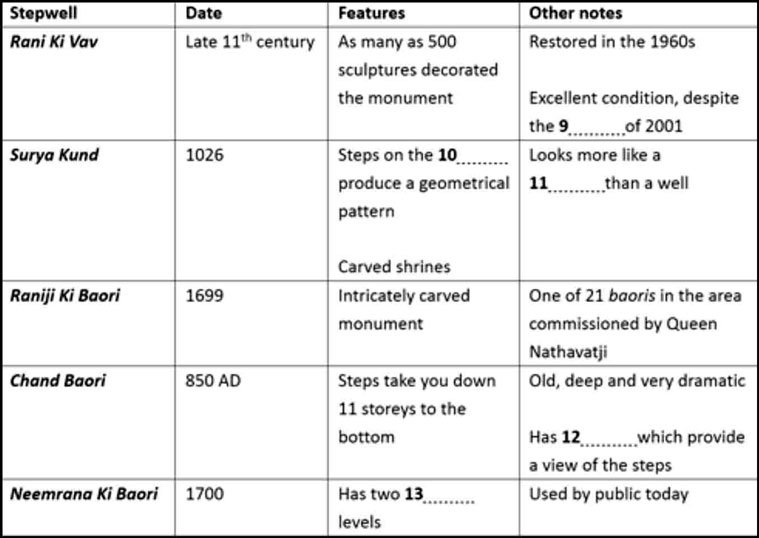
In Patan, the state's ancient capital, the stepwell of Rani Ki Vav (Queen’s Stepwell) is perhaps the finest current example.
在帕坦,古吉拉特邦的重要城市,Rani Ki Vav 的阶梯井(皇后阶梯井)可能是体现这种艺术形式最好的证明。
It was built by Queen Udayamati during the late 11th century, but became silted up following a flood during the 13th century.
Udayamati 女王在11 世纪晚期建立了它,但是在13 世纪期间发生的洪水使它塞满了淤泥。
But the Archaeological Survey of India began restoring it in the 1960s, and today it is in pristine condition.
但是在20 世界60 年代,印度考古研究所开始修复它并且现在它已经重现原来的模样了。
At 65 metres long, 20 metres wide and 27 metres deep, Rani Ki Vav features 500 sculptures carved into niches throughout the monument.
65 米长,20 米宽,27 米深,Rani Ki Vav 有500 个雕刻在井壁上的雕塑。
Incredibly , in January 2001, this ancient structure survived an earthquake that measured 7.6 on the Richter scale.
难以置信,这个古老的建筑物竟然在2001 年1 月份发生震度达里氏7.6 级的大地震中保存下来了。
Another example is the Surya Kund in Modhera, northern Gujarat, next to the Sun Temple, built by King Bhima I in 1026 to honour the sun god Surya.
另外一个是古吉拉特邦北部Modhera 的SuryaKund 阶梯井,毗邻太阳神庙,博赫门国王一世为祭祀太阳神苏里耶在1026 年建立了它。
It actually resembles a tank (kund means reservoir or pond) rather than a well, but displays the hallmarks of stepwell architecture, including four sides of steps that descend to the bottom in a stunning geometrical formation .
实际上,它更像一个贮水池而不是一口井,但是它展示了阶梯井建筑的特征,包括台阶的四面以令人目眩的几何方式延伸到底部。
The terraces house 108 small, intricately carved shrines between the sets of steps.
阶梯的台阶之间有108 个雕刻精致的小佛龛。
Rajasthan also has a wealth of wells.
拉贾斯坦邦也有很多井。
The ancient city of Bundi, 200 kilometres south of Jaipur, is renowned for its architecture, including its stepwells.
位于Jaipur 南部200 公里的古老城市Bundi 以其建筑而闻名,其中包括阶梯井。
One of the larger examples is Raniji Ki Baori, which was built by the queen of the region, Nathavatji, in 1699.
更大的阶梯井之一就这个地区的Nathavatji 女王在1699 年建立的RanijiKi Baori。
At 46 meters deep, 20 metres wide and 40 metres long, the intricately carved monument is one of 21 baoris commissioned in the Bundi area by Nathavatji.
精心雕刻的遗址 46 米深,20 米宽,40 米长,是21 个Baori 当中的一个,其位于Nathavatji 的Bundi 地区。
In the old ruined town of Abhaneri, about 95 kilometers east of Jaipur, is Chand Baori, one of India's oldest and deepest wells; aesthetically it’s perhaps one of the most dramatic .
位于Jaipur 东部95 千米的废弃老镇Abhaneri 中的Chand Baori 是印度最古老最深的一座阶梯井; 从美学上看, 它或许是当中最戏剧的一个。
Built in around 850 AD next to the temple of Harshat Mata, the baori comprises hundreds of zigzagging steps that run along three of its sides, steeply descending 11 storeys, resulting in a striking pattern when seen from afar.
建于公元850 年左右, Harshat Mata 寺庙旁的baori 的三面由成百上千个蜿蜒曲折的台阶构成,一直往下延续11 层,结果从远处看是非常醒目惊人的图形。
On the fourth side, verandas which are supported by ornate pillars overlook the steps.
在第四面上,很多华丽的柱子支持着走廊,俯瞰这些台阶。
Still in public use is Neemrana Ki Baoriy located just off the Jaipur-Delhi highway.
位于Jaipur-Delhi 公路旁的Neemrana Ki Baori 阶梯井仍然用于公共场所。
Constructed in around 1700, it is nine storeys deep, with the last two being underwater.
构造于1700 年左右, 一共有九层,其中最后两层在水下。
At ground level, there are 86 colonnaded openings from where the visitor descends 170 steps to the deepest water source.
在地面上,有86 个柱廊开口,从那里游客往下走170 个台阶可以到达最深的水源。
Today, following years of neglect, many of these monuments to medieval engineering have been saved by the Archaeological Survey of India, which has recognised the importance of preserving them as part of the country’s rich history.
今天,在多年的被忽视之后,这些古迹中的中世纪工程已经被印度考古研究所保存,该组织已经意识到保护它们成为丰富印度历史的一部分的重要性。
Tourists flock to wells in far-flung corners of northwestern India to gaze in wonder at these architectural marvels from hundreds of years ago, which serve as a reminder of both the ingenuity and artistry of ancient civilisations and of the value of water to human existence.
游客们涌向印度西北部偏远地区的阶梯井,凝视这些,体现了独具匠心又充满艺术性质的古老文明和水对于人类存在价值的数百年前的建筑奇迹。