[C5T4P1]The Impact of the Wilderness Tourism
1
A The market for tourism in remote areas is booming as never before. A.偏远地区的旅游市场从未如此火爆。 Countries all across the world are actively promoting their ‘wilderness’ regions - such as mountains,
Tourists are drawn to these regions by their natural landscape beauty and the unique cultures of their indigenous people.
这些地区迷人的自然风光和当地人独特的文化吸引了大批游客。
And poor governments in these isolated areas have welcomed the new breed of *adventure tourist*, grateful for the hard current they bring.
这些偏远地区贫穷的政府也欢迎新一批的“冒险旅行家”,非常感激他们带来的“硬通货”。
For several years now, tourism has been the prime source of foreign exchange in Nepal and Bhutan.
几年来,旅游业已经成为尼泊尔和不丹的主 要外汇来源。
Tourism is also a key element in the economies of Arctic zones such as Lapland and Alaska and in desert areas such as Ayers Rock in Australia and Arizona's Monument Valley.
旅游业也成为北极地区(如拉普兰、阿拉斯加)和沙漠地区(如澳大利亚埃尔斯洛克地区和 亚利桑那州摩奴门山谷等)的主要经济元素。
2
B Once a location is established as a main tourist destination, the effects on the local community are
In Arctic and desert societies, year-round survival has
traditionally depended on hunting animals and fish and collecting fruit over a
relatively short season.
在北极和沙漠地区,传统上,全年的生计都依赖于在相对较短的季节里所进行的捕猎、捕鱼和果 实采集活动。
However, as some inhabitants become involved in
tourism, they no longer have time to collect wild food; this has led to
increasing dependence on bought food and stores.
然而,由于某些居民从事旅游业,他们没有时间再去采集野生食品,这使得人们越来越依 赖于在商店里购买食品。
Tourism is not always the
culprit behind such changes.
这些变化也不能全都归罪于旅游业。
All kinds of wage labour, or government
handouts, tend to undermine traditional survival systems.
各种有偿劳动和政府发放的物资都将破 坏传统的生存方式。
Whatever the
cause, the dilemma is always the same: what happens if these new, external
sources of income dry up?
不管原因是什么,困境却只有一个:如果这些新的外来收入资源枯竭了,该如何是好?
The physical impact of visitors is another serious
problem associated with the growth in adventure tourism.
游客对环境的影响是另一个严重的问题。
Much attention has
focused on erosion along major trails, but perhaps more important are the
deforestation and impacts on water supplies arising from the need to provide
tourists with cooked food and hot showers.
人们大都会关注主要铁路沿线的土壤腐蚀问题,但更严 重的问题是乱砍滥伐,还有对水源供给所带来的影响,因为当地人需要为游客提供食物和洗澡用的热 水。
In both mountains and deserts,
slow-growing trees are often the main sources of fuel and water supplies may be
limited or vulnerable to degradation through heavy use.
在山区和沙漠地区,生长缓慢的树木是燃料的主要来源,水源供给也会受到乱砍滥伐的影响。
3
C Stories about the problems of tourism have become legion in the last few years. C.旅游业所带来的问题近年来已经愈演愈烈。 Yet it does not have to be a problem. 然而这本来不应该成为问题。 Although tourism
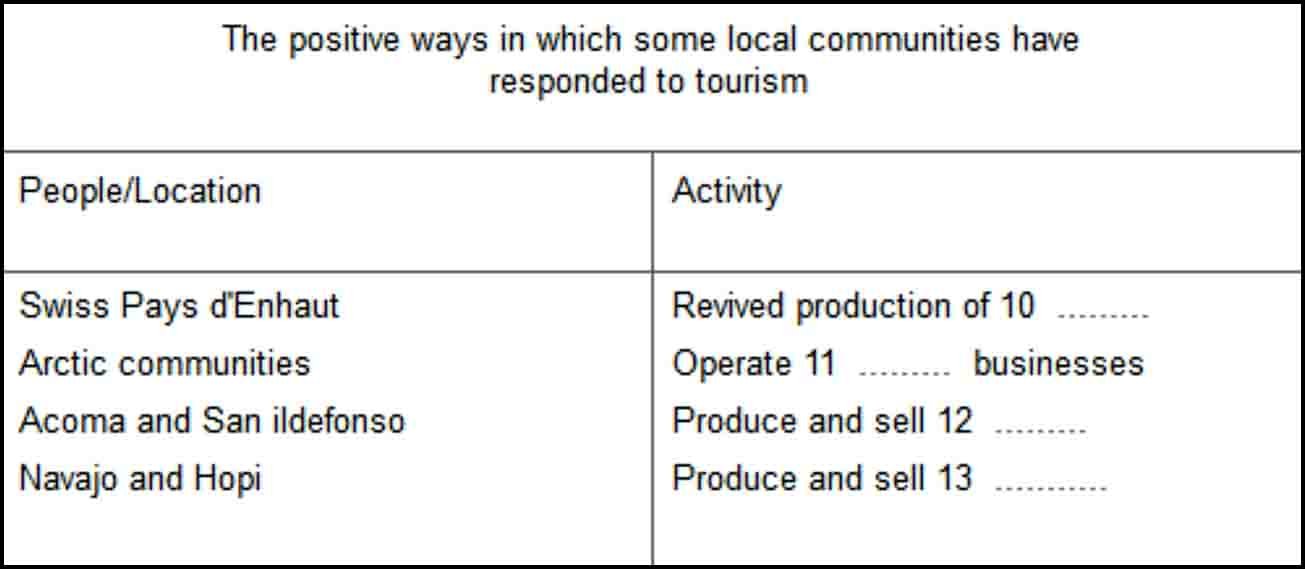
In the Swiss Alps, communities have decided that their
future depends on integrating tourism more effectively with the local economy.
在瑞士阿尔卑斯地区,当地人认为,他们的未来要依赖于将旅游业更有效地与当地经济整合在一 起。
Local concern about the rising number of second home developments in the Swiss
Pays d'Enhaut resulted in limits being imposed on their growth.
越来越多的外来人开始在瑞士帕斯地区建设第二套房屋,当地人对此非常担忧,因此限制了他们 的这种做法。
There has
also been a renaissance in communal cheese production in the area, providing
the locals with a reliable source of income that does not depend on outside
visitors.
当地的集体奶酪制作行业也开始复兴,这为当地人提供一种可靠的收入来源,而且不必 依赖外来游客。
Many of the Arctic tourist destinations have been
exploited by outside companies, who employ transient workers and repatriate
most of the profits to their home base.
北极的很多旅游目的地都是有外来公司开发的,它们聘用临时工,并且把大部分收益返回给自己 的所在地。
But some Arctic communities are now
operating tour businesses themselves, thereby ensuring that the benefits accrue
locally.
但是现在已经有北极当地的社团开始亲自运作当地的旅游业,从而确保旅游收益可以在本 地得到积累。
For instance, a native corporation in Alaska, employing local
people, is running an air tour from Anchorage to Kotzebue, where tourists eat
Arctic food, walk on the tundra and watch local musicians and dancers.
例如,一家专门聘请当地人的阿拉斯加的本土公司正在运作一个从安卡拉奇到克佐布的 空中旅游项目,游客可以吃北极食品,在苔原上行走并且欣赏当地的音乐和舞蹈。
Native people in the desert regions of the American
Southwest have followed similar strategies, encouraging tourists to visit their
pueblos and reservations to purchase high-quality handicrafts and artwork.
美国东南部沙漠地区的人们也采取了类似的策略,它们鼓励游客造访他们的村庄和保留地,并鼓 励他们在那里购买高质量的手工艺品。
The Acoma and San lldefonso pueblos have established highly profitable pottery
businesses, while the Navajo and Hopi groups have been similarly successful
with jewellery.
艾克马村和圣一丹佛诺村的制陶业收益可观,而纳瓦霍和霍比人在珠宝行业也取得了成功。
Too many people living in fragile environments have lost
control over their economies, their culture and their environment when tourism
has penetrated their homelands.
很多居住在脆弱环境中的人们在游客进入到他们的土地之时无法控制他们自己的经济、文化和环 境。
Merely restricting tourism cannot be the
solution to the imbalance , because people's desire to see new places will not
just disappear.
单纯限制旅游业无法解决这种不平衡状态,因为人们对于陌生地方的渴望是不会消失的。
Instead, communities in fragile environments must achieve
greater control over tourism ventures in their regions, in order to balance
their needs and aspirations with the demands of tourism.
相反,脆 弱环境中的人们必须更好的控制本地的旅游业投资,才能使他们自己的需求和渴望与旅游业的要求达 到平衡。
A growing number
of communities are demonstrating that, with firm communal decision-making, this
is possible.
社团数量的增加表明,有了强有力的集体决策,这是完全可以做到的。
The critical question now is whether this can become the norm,
rather than the exception.
现在,问题的关键在 于,这能否成为共识,而不仅仅是特例。