[C8T2P1]Sheet Glass Manufacture: The Float Process
Glass,
which has been made since the time of the Mesopotamians and Egyptians, is
little more than a mixture of sand, soda ash and lime .
在美索不达米亚人和埃及人时期人们就会制造玻璃,它更像是沙子、苏打灰以及石灰的混合物。
When heated to about
1500 degrees Celsius (°C) this becomes a molten mass that hardens
when slowly cooled.
当加热到1,500 摄氏度左右的时候这种混合物就会熔化成一团并在温度降低后逐渐变硬。
The first successful method for making clear, flat
glass involved spinning.
第一种成功制造出透明平整的玻璃的办法是旋转法。
This method was very effective as the glass had
not touched any surfaces between being soft and becoming hard, so it stayed
perfectly unblemished , with a ‘fire finish’.
这种方法的效率非常高,因为玻璃在从软变硬的过程中不会碰到任何物体的表面,通过“退火”处理,没有任何瑕疵。
However, the process took a long time and was labour intensive.
但是,整个过程需要花费很长时间,并且需要很多人力。
Nevertheless,
demand for flat glass was very high and glassmakers across the world were
looking for a method of making it continuously.
尽管如此,平板玻璃的需求还是非常高,全世界的玻璃工人都在寻找一种能持续制造平板玻璃的方法。
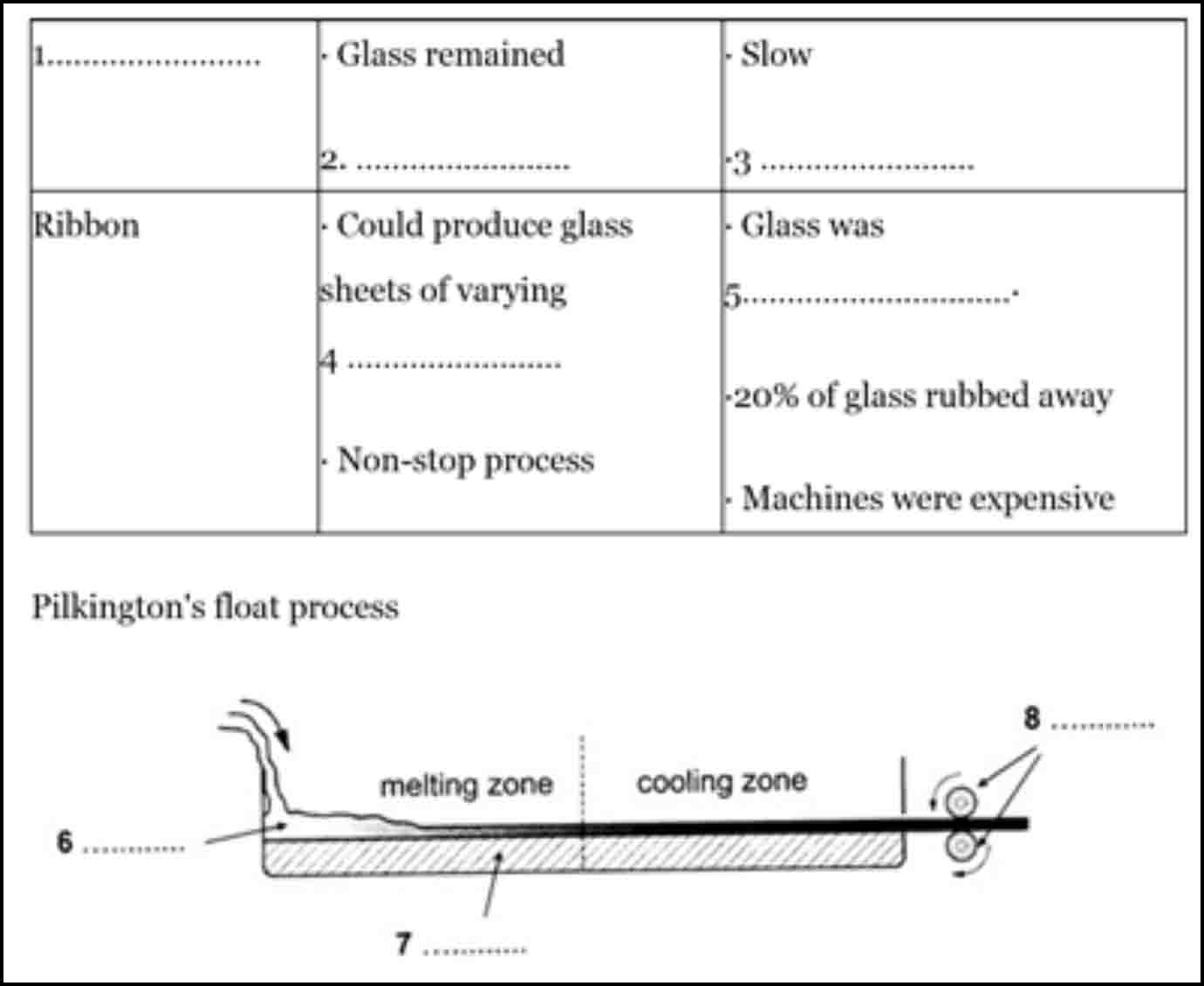
The first continuous ribbon
process involved squeezing molten glass through two hot rollers, similar to an
old mangle.
第一种可持续的带式生产法是用两个热滚压机挤压熔化的玻璃,就像一种老式的压榨机。
This allowed glass of virtually any thickness to be made
non-stop, but the rollers would leave both sides of the glass marked, and these
would then need to be ground and polished.
这几乎可以无间歇地将玻璃压成任何厚度。但滚压机一离开玻璃两面的时候就会留下痕迹,从而需要将玻璃马上放在地上进行抛光。
This part of the process rubbed
away around 20 per cent of the glass, and the machines were very expensive.
而这将磨去20%左右的玻璃,并且这种机器十分昂贵。
The
float process for making flat glass was invented by Alistair Pilkington.
Alistair Pilkington 发明了制造平板玻璃的漂浮法。
This process allows the manufacture of clear, tinted and coated glass for
buildings, and clear and tinted glass for vehicles.
这种方法可以为建筑生产出透明的、带颜色的及有涂层的玻璃,也可以分为交通工具生产出透明的及带颜色的玻璃。
Pilkington had been
experimenting with improving the melting process, and in 1952 he had the idea
of using a bed of molten metal to form the flat glass, eliminating altogether
the need for rollers within the float bath.
Pilkington为了改善熔化过程做了一些实验,并在1952 年想到用一个熔化金属的底座来制作平板玻璃,有了这个漂浮的炉底之后他再也不需要热压器了。
The metal had to melt at a
temperature less than the hardening point of glass (about 600°C), but could net boil at a temperature below the temperature of the
molten glass (about 1500°C).
金属的熔点要比玻璃的硬化点(600 摄氏度)要低,但在玻璃熔化时的温度(1500 摄氏度)以下时不会沸腾。
The best metal for the
job was tin .
在这一过程中最合适的金属是锡。
The rest
of the concept relied on gravity , which guaranteed that the surface of the
molten metal was perfectly flat and horizontal.
剩下的过程就要依靠重力了,重力可以保证熔化金属表面的绝对平整和水平。
Consequently, when pouring
molten glass onto the molten tin , the underside of the glass would also be
perfectly flat.
因此,将熔化的玻璃倒入熔化的锡中时,玻璃下方的表面也会保持非常平整。
If the glass were kept hot enough, it would flow over the
molten tin until the top surface was also flat, horizontal and perfectly
parallel to the bottom surface.
如果玻璃一直保持足够热的话,它就会流满熔化的锡的表面直到玻璃的上表面也变得平整、水平以及和下表面保持平行。
Once the glass cooled to 604°C or less it was too hard to mark and could be transported out of
the cooling zone by rollers.
一旦玻璃在604 摄氏度或以下时就会很难出现痕迹,并且可以被滚轮运到凉快的地方。
The glass settled to a thickness of six
millimetres because of surface tension interactions between the glass and the
tin .
由于玻璃和锡之间的表面张力互相作用,玻璃的厚度可以做到6毫米。
By fortunate coincidence , 60 per cent of the flat glass market at that
time was for six- millimetre glass.
非常巧合的是,那时的市场上有60% 的需求都是6 毫米的平板玻璃。
Pilkington built a pilot plant in 1953 and by 1955 he had convinced his company to build a full-scale plant.
Pilkington 在1953 年建立了一个实验性的工厂,1955 年,他说服了他的公司建立了一个大规模的工厂。
However, it took 14 months of non-stop production, costing the company £100,000 a month, before the plant produced any usable glass.
不过直到生产出可用的玻璃,他们一共用了14 个月的时间进行连续生产,每个月要花费公司100,000 英镑。
Furthermore, once they succeeded in making marketable flat glass, the machine was turned off for a service to prepare it for years of continuous production.
此外,机器在投入长期持续性生产前还需要关闭进行维护才能保证生产出符合市场需求的平板玻璃。
When it started up again it took another four months to get the process right again.
当机器重新启动时还需要4 个月的时间进行调试工作。
They finally succeeded in 1959 and there are now float plants all over the world, with each able to produce around 1000 tons of glass every day, non-stop for around 15 years.
他们最终在1959 年获得成功,而今平板玻璃厂已经遍布世界,每家工厂每天都可以生产出将近1,000 吨的玻璃,并可以持续工作15 年。
The
principle of float glass is unchanged since the 1950s.
自从20 世纪50 年代年至今漂浮法的原理就没有变过。
However, the product
has changed dramatically , from a single thickness of 6.8 mm to a range from
sub-millimetre to 25 mm, from a ribbon frequently marred by inclusions and
bubbles to almost optical perfection.
不过,产品却发生了巨大的变化,从只有6.8 毫米厚到可以生产出从小于1 毫米到25 毫米的玻璃,从频繁地被杂质和气泡损伤的条状玻璃到几乎完美的光学品质。
To ensure the highest quality,
inspection takes place at every stage.
为了保证最高品质,检查贯穿了每一个生产步骤。
Occasionally, a bubble is not
removed during refining, a sand grain refuses to melt, a tremor in the tin puts
ripples into the glass ribbon .
在制造的过程中也会偶尔发生一些问题,比如在精炼中一个气泡没有被消除,一个沙粒没有被熔化,或者一次锡的颤动引起的玻璃表面的不平整。
Automated on-line inspection does two things.
而自动在线检查会做两件事。
Firstly, it reveals process faults upstream that can be corrected.
首先,它能够发现前端错误并进行纠正。
Inspection technology allows more than 100 million measurements a second to be
made across the ribbon , locating flaws the unaided eye would be unable to see.
检查技术在玻璃带上能够以多于每秒1 亿次的频度进行工作,定位那些肉眼无法看到的缺陷。
Secondly, it enables computers downstream to steer cutters around flaws.
其次,它通过电脑在后端使用切割器去除缺陷。