[C8T4P3]Collecting Ant Specimens
Collecting
ants can be as simple as picking up stray ones and placing them in a glass jar,
or as complicated as completing an exhaustive survey of all species present in
an area and estimating their relative abundances.
收集蚂蚁可以很简单,捡起迷失的蚂蚁并把它们放在一个玻璃杯中;也可以很复杂,把所有的种类都放到一个区域,来完成一个详尽的调查研究,并且完成相对的分布量测试。
The exact method used
will depend on the final purpose of the collections.
确切的收集方式取决于最终的目的。
For taxonomy, or
classification, long series, from a single nest, which contain all castes
(workers, including majors and minors, and, if present, queens and males) are
desirable, to allow the determination of variation within species.
如果是为了动植物的分类或者分级,长期的收集是比较好的,从一个简单的蚂蚁巢,其中包括各种阶级团体(工蚁、兵蚁、还有蚁后和雄蚁),到不同种类间的变化。
For
ecological studies, the most important factor is collecting identifiable
samples of as many of the different species present as possible.
如果是为了生态研究,最重要的是收集尽可能多不同种类的可识别的标本。
Unfortunately, these methods are not always compatible .
然而不幸的是,这几种方法并不总是兼容的。
The taxonomist
sometimes overlooks whole species in favour of those groups currently under
study, while the ecologist often collects only a limited number of specimens of
each species, thus reducing their value for taxonomic investigations.
生物分类学家通过正在进行研究的几组样品来观察整个物种,而生态学家通常每个物种只收集很少标本,也因此降低了作为分类调查研究的价值。
To
collect as wide a range of species as possible, several methods must be used.
为了尽可能广泛地收集不同品种,会用到一些方法。
These include hand collecting, using baits to attract the ants, ground litter
sampling, and the use of pitfall traps.
这些方法包括手工收集,用饵来引诱蚂蚁,枯枝落叶下的样品收集,以及使用一些陷阱。
Hand collecting consists of
searching for ants everywhere they are likely to occur.
手工收集需要搜索蚂蚁喜欢出没的任何场所。
This includes on
the ground, under rocks, logs or other objects on the ground, in rotten wood on
the ground or on trees, in vegetation , on tree trunks and under bark .
这些场所包括地面,岩石下,原木中,或其他地上的物体,地上或树上的腐木中,植物中,树干上,树皮下等。
When
possible, collections should be made from nests or foraging columns and at
least 20 to 25 individuals collected.
可能的话,应该收集巢中或者在柱状物体中觅食的标本,且最少收集 20 到 25 个。
This will ensure that all individuals
are of the same species, and so increase their value for detailed studies.
这样可以确保收集的所有个体都是同一物种,也为更具体的研究提供价值。
Since some species are largely nocturnal , collecting should not be confined to
daytime.
因为有些种类的蚂蚁是夜间活动的,就不应该在白天收集标本。
Specimens are collected using an aspirator (often called a
pooter), forceps, a fine, moistened paint brush, or fingers, if the ants are
known not to sting.
通常用吸气器(也称为吸虫管),镊子,干净的潮湿的油漆刷来收集,如果你知道将要收集的蚂蚁不刺人,还可以用手指来收集。
Individual insects are placed in plastic or glass tubes
(1.5-3.0ml capacity for small ants, 5-8 ml for larger ants) containing
75% to 95% ethanol.
单个的蚂蚁被放在装有 75% - 95% 乙醇的塑料或者玻璃试管中(1.5 - 3 毫升容量的试管装小蚂蚁,5 - 8 毫升的装大蚂蚁)。
Plastic tubes with secure tops are better than glass
because they are lighter, and do not break as easily if mishandled.
有密封塞的塑料管比玻璃管好,因为他们更轻,也不容易在失误的情况下摔碎。
Baits
can be used to attract and concentrate foragers.
诱饵可以用来引诱觅食的蚂蚁。
This often increases the
number of individuals collected and attracts species that are otherwise elusive .
这样可以收集更多体标本的数量,并且可以引诱那些平时不易捕捉到的品种。
Sugars and meats or oils will attract different species and a range should be
utilised.
糖、肉、油会吸引不同种类的蚂蚁,因此要分类使用。
These baits can be placed either on the ground or on the trunks
of trees or large shrubs.
这些诱饵可以放在地上,树干上或者大灌木上。
When placed on the ground, baits should be
situated on small paper cards or other flat, light-coloured surfaces, or in
test-tubes or vials.
放在地上的时候,诱饵应该放在纸卡片,或者其他平的、浅色的表面上,或者放在试管、小瓶中。
This makes it easier to spot ants and to capture them
before they can escape into the surrounding leaf litter.
这样能更好地辨认出蚂蚁,并能在它们逃往附近的落叶前捕获它们。
Many
ants are small and forage primarily in the layer of leaves and other debris on
the ground.
很多蚂蚁很小,且基本只在地上的落叶和其他碎片中觅食。
Collecting these species by hand can be difficult.
徒手收集很困难。
One of
the most successful ways to collect them is to gather the leaf litter in which
they are foraging and extract the ants from it.
有一种最好的方法是先聚拢那些有蚂蚁觅食的树叶,再将它们赶出树叶。
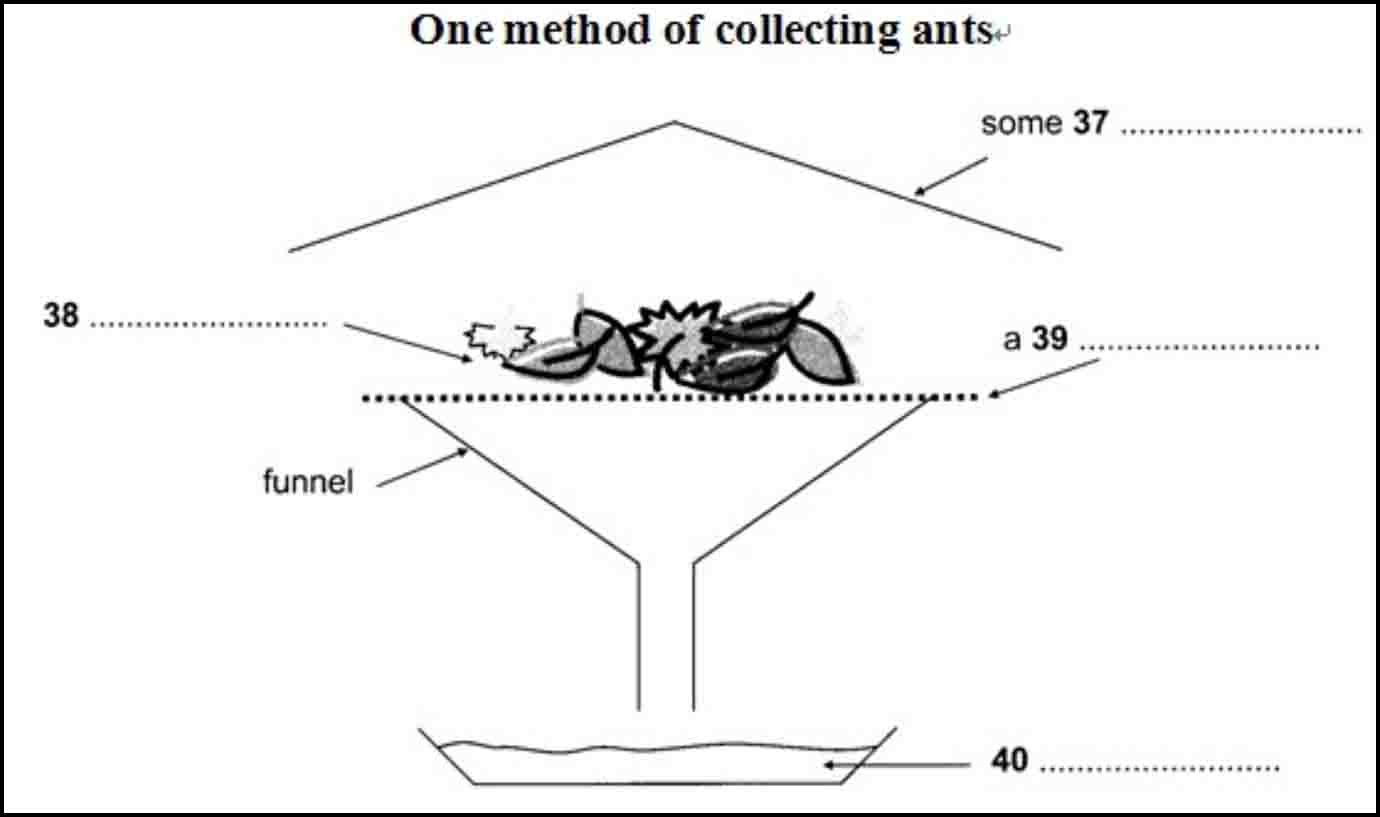
This is most commonly done
by placing leaf litter on a screen over a large funnel , often under some heat.
通常可以这样做,将落叶放在一个装有漏斗的过滤器皿上,在树叶底下加热。
As the leaf litter dries from above, ants (and other animals) move downward and
eventually fall out the bottom and are collected in alcohol placed below the
funnel .
当树叶从上面变干,蚂蚁(或者其他动物)会往下走,最终落入漏斗的底部,里面还装有酒精。
This method works especially well in rain forests and marshy areas.
这种方法在雨林和沼泽区域中特别有效。
A method of improving the catch when using a funnel is to sift the leaf litter
through a coarse screen before placing it above the funnel .
在使用漏斗来收集标本时,有一种方法可以提高捕获效率,就是在把树叶放到漏斗上部之前使用粗孔筛进行筛选。
This will
concentrate the litter and remove larger leaves and twigs.
这样可以只收集到蚂蚁而去掉大型的树叶和小树枝,
It will also
allow more litter to be sampled when using a limited number of funnels.
还可以在使用少数漏斗的情况下收集更多的标本。
The
pitfall trap is another commonly used tool for collecting ants.
陷阱是另外一种常用的收集蚂蚁标本的方法。
A pitfall
trap can be any small container placed in the ground with the top level with
the surrounding surface and filled with a preservative .
这种陷阱可以是任何放在地上的小的容器,顶部和周围的表面一样,里面装有保存样品的溶剂。
Ants are collected
when they fall into the trap while foraging.
蚂蚁在外出觅食时落入陷阱中,而后被收集。
The diameter of the traps can
vary from about 18 mm to 10 cm and the number used can vary from a few to
several hundred.
陷阱的直径是可变的,从 18 毫米到 10 厘米不等,陷阱的数量也是可变的,从几个到好几百个。
The size of the traps used is influenced largely by
personal preference (although larger sizes are generally better), while the
number will be determined by the study being undertaken.
陷阱的大小取决于个人喜好(虽然大尺寸的陷阱通常更好),而陷阱的数量取决于研究的任务。
The preservative
used is usually ethylene glycol or propylene glycol, as alcohol will evaporate
quickly and the traps will dry out.
样品的保存剂一般是乙二醇或者丙二醇,因为酒精可以很快蒸发导致陷阱变干。
One advantage of pitfall traps is that
they can be used to collect over a period of time with minimal maintenance and
intervention.
使用陷阱的优点是,在很长一段时间内,陷阱都可以被用来收集标本,而只需要很小的维护和人工介入。
One disadvantage is that some species are not collected as
they either avoid the traps or do not commonly encounter them while foraging.
缺点是有些品种的蚂蚁不能被收集到,因为它们在觅食时躲开了陷阱,或者没有遇到陷阱。